Skip to content

If you manage a commercial building, the cold water storage tank is easy to forget about. It sits in a plant room, loft or on the roof, and as long as the taps run, nobody thinks about it. But cold water tanks are covered by a clear set of regulations and guidance, and a tank that falls short can lead to poor water quality, Legionella risk and problems with your water supplier or insurer.
This guide explains the main rules that apply to cold water storage tanks in commercial buildings in England and Wales, what they mean in practice, and the signs that a tank no longer meets them.
The Water Supply (Water Fittings) Regulations 1999
The Water Supply (Water Fittings) Regulations 1999 are the main legal requirements for plumbing systems connected to the public water supply in England and Wales (Scotland has its own equivalent, the Water Byelaws). They exist to prevent waste, misuse, undue consumption and contamination of drinking water.
For cold water storage cisterns, the regulations and their schedule of requirements mean a tank should:
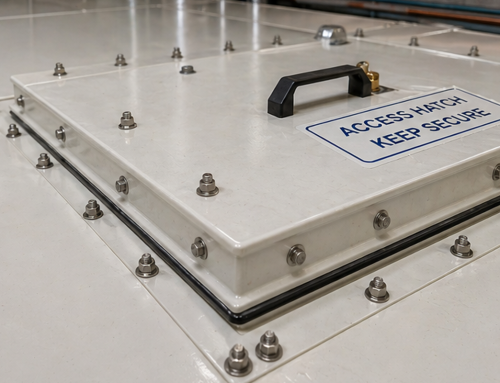
- Have a rigid, close-fitting cover that is not airtight but excludes light and insects, and stops anything falling into the water.
- Be insulated against both heat and frost, so the stored water stays cool and doesn’t freeze.
- Have screened vents and overflow or warning pipes, fitted with insect screens so nothing can get in.
- Avoid stagnation, with the inlet and outlet arranged so water flows through the whole tank rather than sitting in one corner.
- Be accessible for inspection, cleaning and maintenance.
- Be made from suitable materials that won’t contaminate the water. Using WRAS-approved tanks and fittings is the usual way to demonstrate this.
Some work also has to be notified to your water supplier before it starts. For example, installing a pump or booster set that draws more than 12 litres per minute from the supply pipe needs prior notification. If you’re unsure whether your project needs notifying, your installer or water supplier can advise.
Legionella: ACoP L8 and HSG274
If you’re an employer or you’re in control of a building, you have a legal duty to assess and control the risk of exposure to Legionella bacteria. The Health and Safety Executive’s Approved Code of Practice, L8: Legionnaires’ disease – the control of legionella bacteria in water systems, sets out how to meet that duty. Its technical guidance, HSG274 Part 2, covers hot and cold water systems in detail.
The key points for cold water storage tanks are:
- Keep it cold. Cold water should be stored and distributed below 20°C. Legionella multiplies most readily between 20°C and 45°C, so a tank that warms up in a hot plant room or on a sunny roof is a risk.
- Keep it moving. Oversized tanks or tanks serving areas that are no longer used lead to low turnover and stagnant water.
- Keep it clean. Sediment, rust, biofilm and debris give bacteria somewhere to grow.
- Inspect it regularly. HSG274 recommends that cold water storage tanks are inspected at least annually, checking the condition of the tank and the water temperature, with cleaning and disinfection carried out when the inspection shows it’s needed.
- Keep records. Your risk assessment, inspections, temperature checks and remedial work should all be written down.
British Standards and Disinfection
BS EN 806 and BS 8558 set out good practice for the design, installation, testing and maintenance of water supply systems in buildings. One important requirement is that new or altered systems are flushed and disinfected before they are put into use. That’s why a properly installed replacement tank is chlorinated along with its pipework before the building’s supply is switched back over.
Signs Your Tank May Not Be Compliant
Older tanks, particularly galvanised steel tanks and early GRP tanks, often fall short of today’s requirements. Common warning signs include:
- A missing, damaged or loose-fitting lid
- Vents or overflows with no insect screens
- Rust, corrosion or flaking coatings inside the tank
- Leaks, weeping joints or damp around the base
- Sediment, debris or dead insects in the water
- Missing or damaged insulation
- Stored water above 20°C
- A tank that is far bigger than the building now needs
Some of these can be put right with remedial work, cleaning, disinfection or refurbishment. Where a tank is badly corroded, leaking or simply the wrong size, replacement is usually the most reliable way to bring the system up to standard.
Repair, Refurbish or Replace?
A survey is the best place to start. At Express Water Tanks, one of our experienced engineers will inspect your tank, access and pipework, then give you a detailed quotation with a risk assessment, method statement and estimated timescale of works. If the tank can be brought up to standard with cleaning, refurbishment or remedial work, we’ll tell you. If it needs replacing, we can install a new WRAS-approved one-piece, two-piece or sectional tank, with byelaw upgrades to L8 water regulations and cross flow installations to help combat Legionella. Where needed, we provide a temporary supply so the building keeps its water throughout.
Frequently Asked Questions
Who is responsible for a commercial cold water tank?
The duty sits with the employer or the person in control of the premises, such as a landlord, managing agent or facilities manager. They must make sure a Legionella risk assessment is in place and that the control measures, including tank inspections, are carried out and recorded.
How often should a cold water storage tank be inspected?
HSG274 recommends inspecting cold water storage tanks at least once a year, checking both the condition of the tank and the water temperature. Your own risk assessment may call for more frequent checks.
What temperature should a cold water tank be?
Stored cold water should be kept below 20°C to reduce the risk of Legionella growth.
Does a new tank need to be disinfected?
Yes. New or altered systems should be flushed and disinfected before use. We chlorinate the new tank and pipework as standard before handover.
Need Help With Your Cold Water Tank?
Express Water Tanks is a family-run business with over 25 years’ experience in the repair, refurbishment, cleaning and replacement of commercial water tanks. We work across London, the South East and beyond, and our engineers are available 24 hours a day, 365 days a year. Find out more about our cold water storage tank replacement service, call 01206 239804 or get in touch online.
This guide is a general overview and isn’t a substitute for a site-specific risk assessment or advice from a competent person.