When a commercial cold water storage tank needs replacing, one of the first decisions is what it should be made of. Most replacement tanks in UK commercial buildings are either GRP (glass reinforced plastic) or steel, usually galvanised or pressed steel. Both can do the job well, but they suit different buildings.
Here’s how they compare, based on what we see when replacing and installing tanks on site.
Corrosion
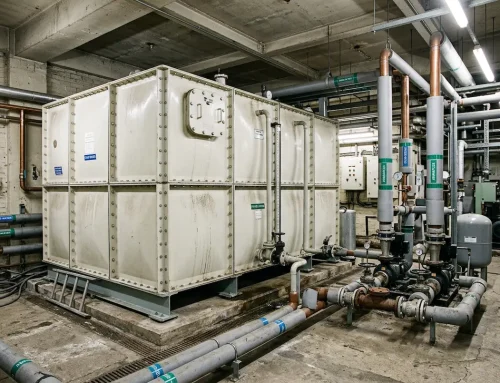
This is the biggest difference. GRP doesn’t rust, so it holds up well against moisture and the condensation found in plant rooms and roof spaces. Steel tanks depend on their protective coating. Once that breaks down, rust can set in on the panels, bolts and supports, which is one of the most common reasons we’re asked to replace older galvanised tanks.
Water hygiene and Legionella control
GRP panels are smooth and non-porous, which makes them easier to clean and less likely to hold sediment. They also have good insulating properties, which helps keep stored water cool and out of the temperature range where Legionella bacteria grow. Steel tanks can be kept hygienic too, but corroded internal surfaces give sediment and bacteria more places to settle. Both should be WRAS-approved for drinking water and cleaned and inspected regularly, as covered in our guide on how often a commercial water tank should be cleaned.
Lifespan
As a general guide, a well-installed GRP sectional tank can last 25 years or more. Galvanised steel tanks often last 20–25 years, though this depends heavily on water quality, coating condition and how the tank has been looked after.
Access and installation
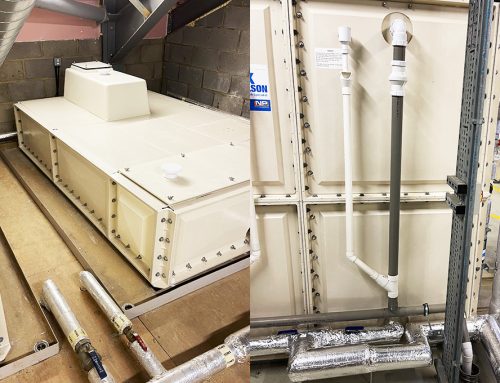
Sectional tanks of both types are delivered as panels and built in place, so they can go into plant rooms, basements and roof spaces where a one-piece tank won’t fit through the door. GRP panels are lighter, which makes them easier to carry into tight or high-level spaces and puts less load on the roof or floor structure. That can make a real difference in older buildings.
Strength and fire considerations
Steel is stronger and more rigid, and it is non-combustible. That can make it the better fit for very large tanks, external installations exposed to damage, or sites with specific fire or structural requirements set by an engineer or insurer.
Cost
GRP sectional tanks are usually the more cost-effective choice for typical commercial cold water storage, both to buy and to install. Steel tends to cost more but can be justified where its strength is needed. The full cost of a replacement also depends on access, the size of the tank, pipework changes and whether a temporary water supply is needed.
At a glance
| GRP sectional | Steel (galvanised or pressed) | |
|---|---|---|
| Corrosion | Doesn’t rust | Relies on its coating |
| Hygiene | Smooth, easy to clean, well insulated | Good while the coating is sound |
| Typical lifespan | 25+ years | 20–25 years |
| Weight | Lighter, easier access | Heavier, more structural load |
| Strength | Good | Higher, non-combustible |
| Cost | Usually lower | Usually higher |
So which should you choose?
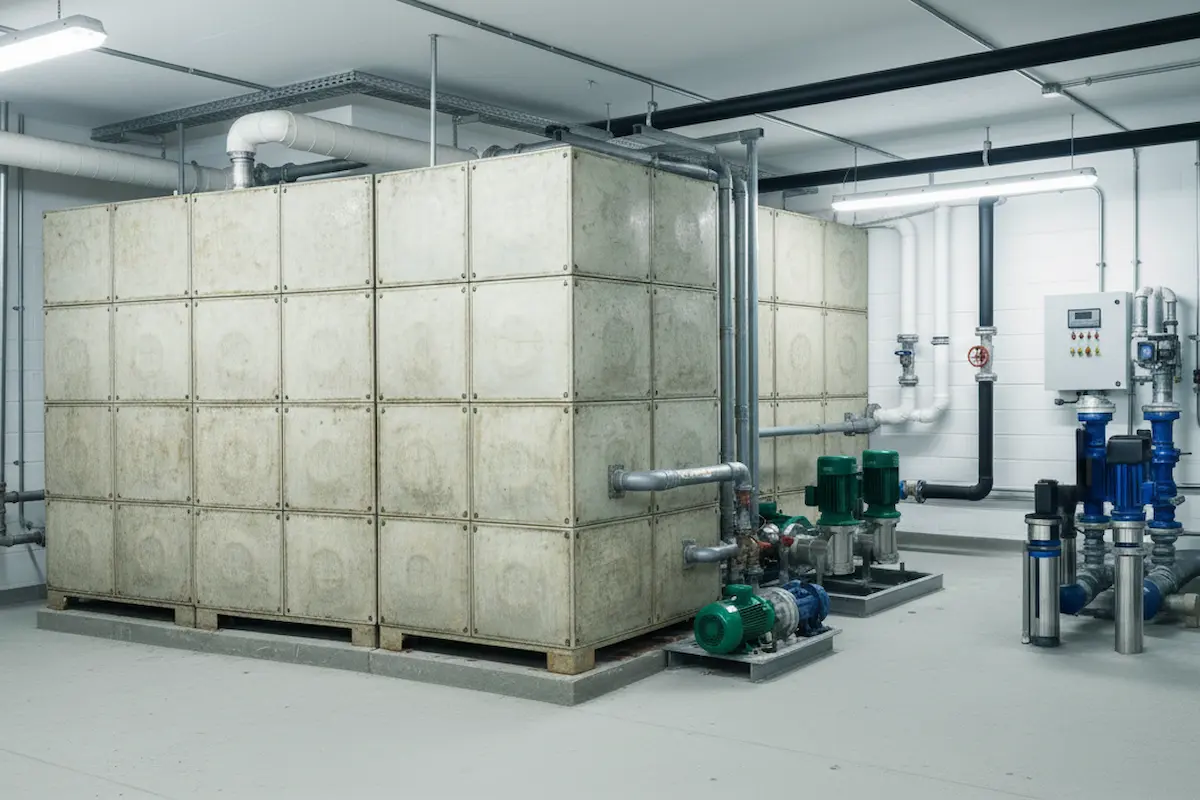
For most offices, hotels, schools, blocks of flats and other commercial buildings, a WRAS-approved GRP sectional tank is the practical choice. It resists corrosion, supports good water hygiene and is easier to install in awkward spaces. Steel still makes sense where extra strength, fire performance or a particular specification is required.
If your existing tank is structurally sound, you may not need a new one at all. Refurbishment and relining can extend its life at a lower cost. Where replacement is the right call, we’ll recommend the tank that suits the building.
Talk to us about your tank
Express Water Tanks supplies, installs and replaces GRP sectional tanks and other cold water storage tanks across the UK. Every installation and replacement starts with a site survey, a detailed quote and RAMS, with a temporary water supply to keep your building running during the works. Call 01206 239804 or request a survey.